Getting Started

So you want to trace your family history, but haven’t a clue where to begin? Here you can read our essential guide to starting out. To get more hints and tips from the experts, or to get a better understanding of all the records and resources available, both online and in the archives, don’t forget to read Family Tree every issue!

Family history starts with you
Begin by recording the details of your own birth, christening (where appropriate), marriage, divorce(s), subsequent remarriage(s), and the dates of birth (and death, where appropriate) of your spouse(s), children and grandchildren.

Now you have the start of a family tree, work backwards, never forward, testing each link in the chain as you go. If you’ve had an eventful personal life, this exercise will introduce you to the complications of assembling even basic data on the lives of some of your ancestors.

Unusual surname?
Your task may be easier if you have an unusual surname. Frequently occurring surname? Take heart: most of us are in the same boat.

You could begin with an ancestor who intrigues you, and try to find out as much as possible about him or her. Don’t know which line to follow – dad’s or mum’s? Select one, and stick with it until you get stuck (you will, then you’ll get unstuck, but meanwhile you can have a look at the other side of the family).

Spread your net wider

  • Talk to older relatives: record their memories of sisters, brothers, mum, dad, grandma, grandad’s job…
  • Has anyone drawn up a tree up in the past? If so, copy it.
  • Is there another family historian in the family? Co-operate.
  • Ask to see birth, marriage and death certificates and photocopy them.
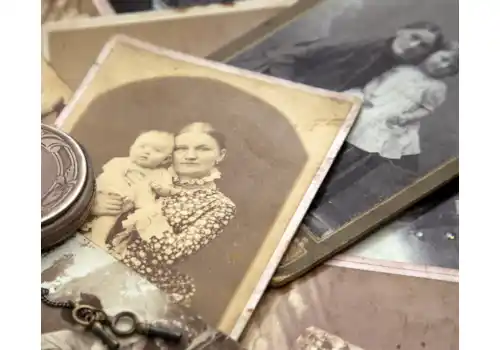
  • Search out family photos, Bibles (which often contain family information), old books, heirlooms and stories. Copy, photocopy, photograph and record as appropriate.

Benefit from the experience of others

  • Enrol in a family history course: ask about one at your local library or adult education college.
  • Join your local family history society (see www.genuki.org.uk) or ask at the library). The best ones organise trips and talks, have libraries, publish indexes and issue magazines containing lists of members’ interest names.
  • Buy a beginners’ guide to family history (click here) .
  • Follow the expert advice in Family Tree magazine! Note tips, shortcuts and pitfalls.
  • Think about joining a one-name society (see www.one-name.org ).
  • Visit a big family history fair.
  • Collect leaflets from the General Register Office (GRO; Southport, Lancashire), The National Archives (TNA; Kew, London) or your local record office.

Keeping records
Note down what (and where) you’ve searched, especially if the result was negative. Specialised record keeping systems for family historians can be a great help. Visit Family History Bookshop for lots of useful research accessories.

Storing your genealogy data on a computer in a form in which it can be exported to relatives or fellow family historians makes sense, but you may prefer paper, which remains a good back-up for data stored in electronic form.

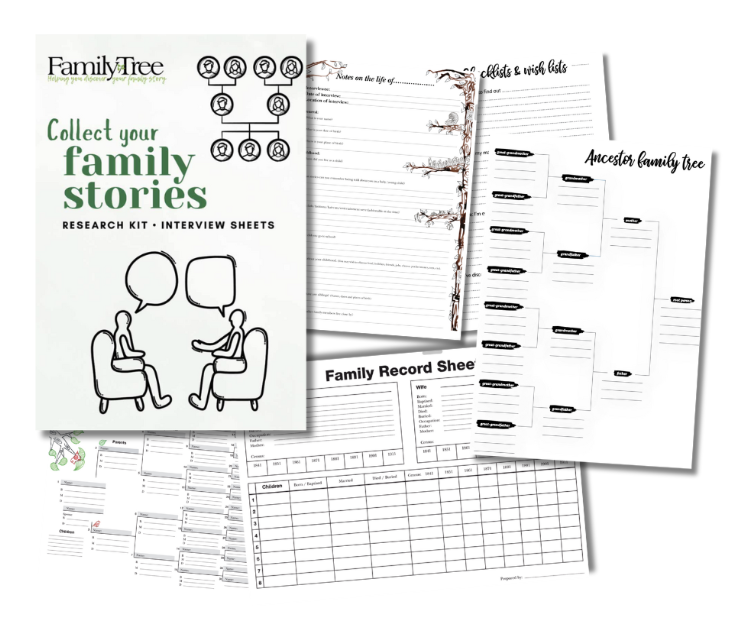
You could also record your findings on one of the family tree charts included free on the cover disc with each print issue of the magazine.

Coming unstuck
Many of us have moved far away from our ‘ancestral’ home. Don’t despair: even before the internet and email improved communication you could join a family history society in that neck of the woods, get help from fellow members and employ a professional researcher when the going got tough. You still can. Family history is a co-operative hobby; those who receive should also give. Helping someone else with their tree is the best way to unstick your research.

In Family Tree magazine we publish lists of useful books and websites at the end of most articles and offer expert tips, from using online maps and trade directories to researching your family in the census records online. We also review the latest family history software programs, DVDs and books.

There’s no need to feel completely stumped if you find yourself looking for Irish or Scottish ancestors because there are good internet and printed guides to researching in Ireland and Scotland, while some English family history societies have strong Irish or Scottish groups. The same is true, to a lesser extent, of Wales.

New skills
Stick with family history and you will acquire some new skills, such as how to use libraries and archives efficiently, zip around websites and read all sorts of handwriting, perhaps even some Latin. You’ll also learn all about old counties and their boundaries and more about the organisation of parishes and the Church than you thought possible.

Don’t forget to purchase your copy of Family Tree every four weeks for the latest genealogy news and expert advice. Or you can Subscribe. Good luck with your new hobby and, most importantly, enjoy the journey!

Ready to get going? Then read about the Next Steps to take to find out more about birth, marriage & death certificates, the census and parish records.

Terms and Conditions | Privacy Policy | Copyright © 2007 - 2012 ABM Publishing LTD | Website built by Zookx